What is Power?
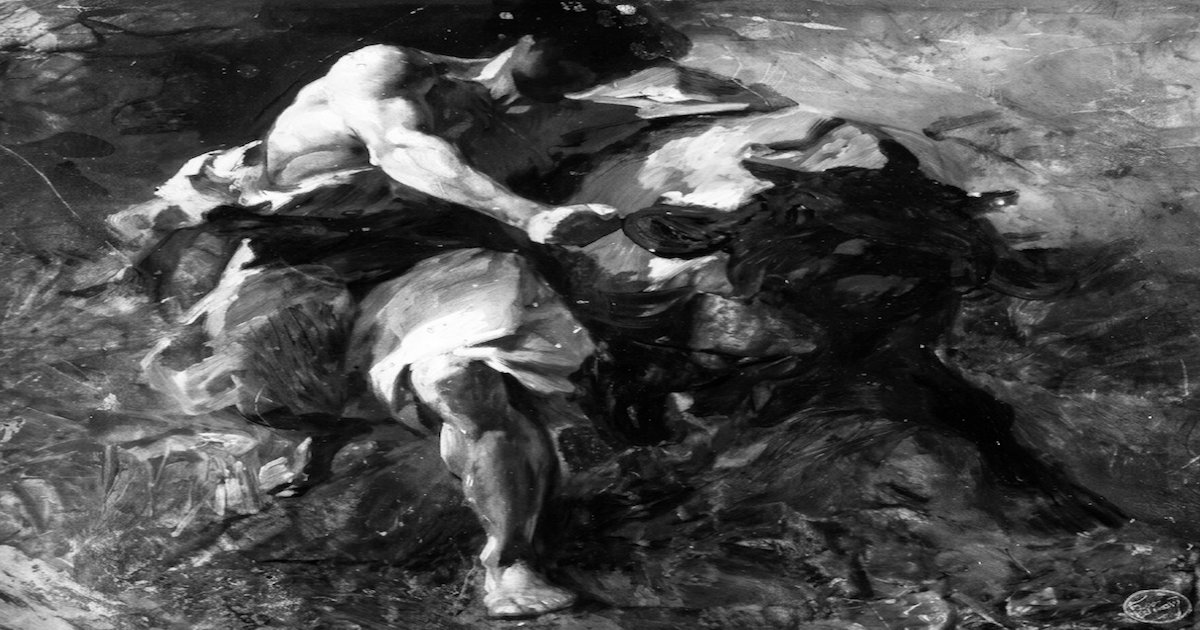
a sketch (man wrestling a bull) by mariano fortuny y marsal (1855 to 1860)
What is power? That is the question I want to answer here. This post is just a quick jot of my thoughts, and it is something new I want to try with my writing moving forward. Instead of refining everything to some point of perfection, whatever that even means, this piece will stay raw. It is my honest attempt to define what power really is.
As defined by Merriam Webster, power has many meanings. These are the ones that stand out to me:
- Ability to act or produce an effect
- Legal or official authority, capacity, or right
- Control, authority, or influence over others
- Political control or influence
The word itself carries a lot of weight in English. In a brief summary of Nietzsche’s Will To Power, power is the inner urge to assert, expand, overcome obstacles, and impose one’s own will and values upon the world. Beyond those interpretations, there are countless other definitions of power across religious, philosophical, political, and other schools of thought.
Knowing that, I want to throw my hat in the ring and sit with the question myself. What is power? I lean more toward Nietzsche’s view. I define power as the ability, and the will, to impose your will and values upon the world. To leave your mark on it in some way. It is tied to that search for proof that you were alive. It reminds me of Jet’s quote from Cowboy Bebop, where he says men only remember the past right before death, as if they are frantically searching for proof of their existence. To show your identity, your self, in this soup of matter we call life, the universe, and everything else.
This is not new, and it is not limited to humans. Every living creature in Earth’s vast diversity of life has fought, and continues to fight, for something like this: to define its existence, to survive, and to reproduce. To what end? That is where religion, philosophy, or something else comes in. But either way, the core idea remains. A universe without life, without observers, is nothing. Or at least it is nothing that can be recognized as anything at all. Like Schrödinger’s cat, if there is no one to observe the state of the cat, then it is both alive and dead, suspended in possibility, never settling into a definite state. Those who live in this reality are the ones who detect and dictate its condition. And because all living things want some say in that condition, life becomes a constant struggle to control something, to impose your will onto reality, and to imprint your own state onto it.
The amount of power you need depends on your ambition and how far you want to push your will into the world. Whether your goal is building a country, a family, or a company, it all comes down to the resources you can command. Money is simply a tool for accessing those resources, and the most important resource is people. Every person is a machine, a being capable of modifying reality. When directed in large numbers, they create a compounding effect on the world. That is why money matters so much. It is one of the most efficient ways to gain access to the ultimate resource: people.
But money alone is not enough.
I often frame this as a thought experiment. A wealthy person says to a leader, “You think you’re powerful, you think you’re a king. But you’re only worth a fraction of what the wealthiest people have. You’re rich, more than most, but you’re far from a king.” The leader just laughs and says, “Sure, in net worth they are worth more. But the difference is this. In one afternoon, with one signature, I can cut that net worth in half.”
The message is simple. People with power usually have money, but not everyone with money has real power. Money gives you access to people, the most valuable resource, but it does not give you absolute power. It is a critical part of the puzzle, not the center of it.
This is where my view of power gets more specific. After spending time trying to break into politics, starting my own company, raising capital, attempting to launch a solar farm for the grid in Turkey, and trading in the financial markets, I learned something core. Money, intelligence, talent, kindness, ruthlessness, and even hard work are not enough on their own. What matters just as much is your relationships and your leverage over other powerful people.
That leverage cannot just be transactional, or just part of the game. It might be information they do not have. It might be resources or access they need that only you can provide. It might even be dirt on them, that can destroy their position. Whatever form it takes, it has to be something so critical to their self interest that it gives you control over them in pursuit of your goal. If you control the kings, if you become the king of kings, then you control the resources and, in turn, the people. Instead of fighting for resources directly, you gain power over those who already hold them. By reaching for the top, you get more direct access to those resources and can force your will onto them, onto their people, and at a large enough scale, onto the world itself. To me, that is what power really is: the ability to impose your will on the world and guide it in the direction you see fit.
Imposing your will is not the same as arguing for it, which is why I keep coming back to a line from Fight Club. Tyler Durden says self-improvement is masturbation and self-destruction is the real answer, since chasing self-improvement to impress someone, or yourself, only feeds your ego, while real change means tearing that ego down instead. Debating is masturbation too, in most cases, since most people do it to look smart or right in front of whoever is watching, not to do the real work that actually moves them forward. Most people are not worth the argument, whether it is a stranger, a random voice online, or someone with no bearing on your goals or your will, and engaging them changes nothing except how you feel in the moment. So pick your battles, and for everything else, do not debate, just push your will forward, and if someone stands in your way, let them try to stop you with words, cheap as they are.
The difference is who you spend that effort on. For the people who actually matter to your goals or your will, you debate them, you inspire them, you do whatever it takes to make them agree with you, fear you, or love you, so long as it brings them in line. Everyone else gets none of that effort, and most of the population will not like what you are doing, but that will not stop it, since they get affected either way. Another core factor in power is not just resources or relationships, but the ability to inspire others. When I think about this, I think of a quote by Phillip Price from Mr Robot: “You can’t force an agenda… you have to inspire one.”
As powerful as people are as a resource, they also have free will. They carry an internal desire for comfort, freedom, meaning, or some combination of the three. You cannot rely on force alone to push your agenda onto them. It is far more effective to inspire them. That is especially true when you are trying to move people who already have power, and through them, move their followers and resources. This is where philosophy, religion, and larger systems of meaning come back into the picture. If you can impart your will, your message, your goal, your purpose to others, if you can give people meaning when they have none and inspire them to follow you, then you will have far greater control over this resource than fear alone could ever give you.
This purpose or mission is not an arbitrary choice. It is tied directly to you as an individual, shaped by your experiences, your education, and your willingness to adapt as you learn. Since all humans have free will, the will you impose on the world is actually a synthesis of everything you have survived and studied. Your goal is the final product of your own evolution. This is what makes a message powerful: it is not just an agenda, but a lived truth that you have forged through your own actions and knowledge.
For many people, none of this will feel true in any practical sense. Most do not care about power or the game of kings. But whether you play that game or not, you are still affected by the people who do. You can choose not to play. You can coast and live a peaceful life. But you are still inside the current. You are still one of the resources that the ambitious fight over. When a figure like Napoleon appears, his will reshapes the entire landscape around you. Like a storm that tears through your environment, all you can do is brace for it and live with the scars it leaves behind.
So what is power?
It is the ability not to be a passive observer in the totality of existence. It is not just wealth, and it is not just controlling billions. It is a chain of leverage. Whether your ambition is to rule the world or simply protect your own corner of it, you need enough power to imprint your will. Without it, you are left waiting to be shaped by those who do.